Jobs To Be Done
People don't buy products. They hire them to make progress in their lives.
“People don't want a quarter-inch drill. They want a quarter-inch hole.”
Understanding what users really need and why they switch.
Job stories and a Forces of Progress analysis.
People hire products to make progress
Jobs To Be Done (JTBD) says people don't buy products for what they are. They “hire” them to get a job done — to make progress in a specific situation in their life. When something does the job better, they “fire” the old product.
The idea was popularised by Harvard professor Clayton Christensen and practitioners like Bob Moesta, and is explained in Competing Against Luck (2016).
For designers, it changes the question from “Who is the user?” to “What is this person trying to get done, right now, and why?”
Six ideas that make JTBD click
The job
Circumstance matters
Three dimensions
Your real competition
Job stories
The switch timeline
The milkshake story
Christensen's most famous JTBD example: a fast-food chain that wanted to sell more milkshakes.
The usual approach
Watch what people do
Ask about the job
The real competition
Same product, different job
Design for the job
Retold from Clayton Christensen's talks and the book Competing Against Luck (2016). Screens are illustrations, not historical documents.
The Forces of Progress
Why do people switch — or not? Two forces push toward a new solution, two hold people back. Change the sliders and see who wins.
Job story builder
Write a job story for your own product. It's checked as you type.
When I've paid for a group dinner, I want to get everyone's share back without chasing them, so I can stay friends and not lose money.
- ✓The situation is specific (a real moment, not “when I use the app”).
- ✓The motivation doesn't name a UI or feature.
- ✓There's a clear outcome — the progress they want.
- ✓It's written from the person's view, not about “users”.
As a user, I want a split bill button, so that I can send payment requests.
It names a persona and a feature. The job story names a moment and a need, which leaves room for better solutions.
Common mistakes
✓ Do
- Describe the situation, not the demographics
- Keep your product and features out of the job
- Include emotional and social parts, not just functional
- Interview people who recently switched — memories are fresh
- Look for competitors outside your category
✗ Avoid
- Writing “jobs” that are really features (“I want to filter by date”)
- Jobs that are too big (“be good with money”) or too small (“tap save”)
- Asking people what they want instead of what they did
- Only asking about your product, not their whole situation
- Forgetting anxiety and habit: great products still lose to them
Jobs To Be Done in one screen
CORE IDEA   People hire products to make progress in a situation.
            They fire them when something does the job better.

JOB STORY   When [situation], I want to [motivation], so I can [outcome].
DIMENSIONS  functional · emotional · social

FORCES OF PROGRESS
  toward switching:  push of the situation + pull of the new solution
  against switching: anxiety of the new solution + habit of the present
  → switch happens when push + pull > anxiety + habit

SWITCH TIMELINE
  first thought → passive looking → active looking → deciding → first use → satisfied?

GOOD QUESTIONS
  "Tell me about the day you first thought about this."
  "What did you try before? Why didn't it work?"
"What almost stopped you from switching?"Figma template
A ready-made canvas for running this framework with your team. Free, editable, and it works in Figma and FigJam.
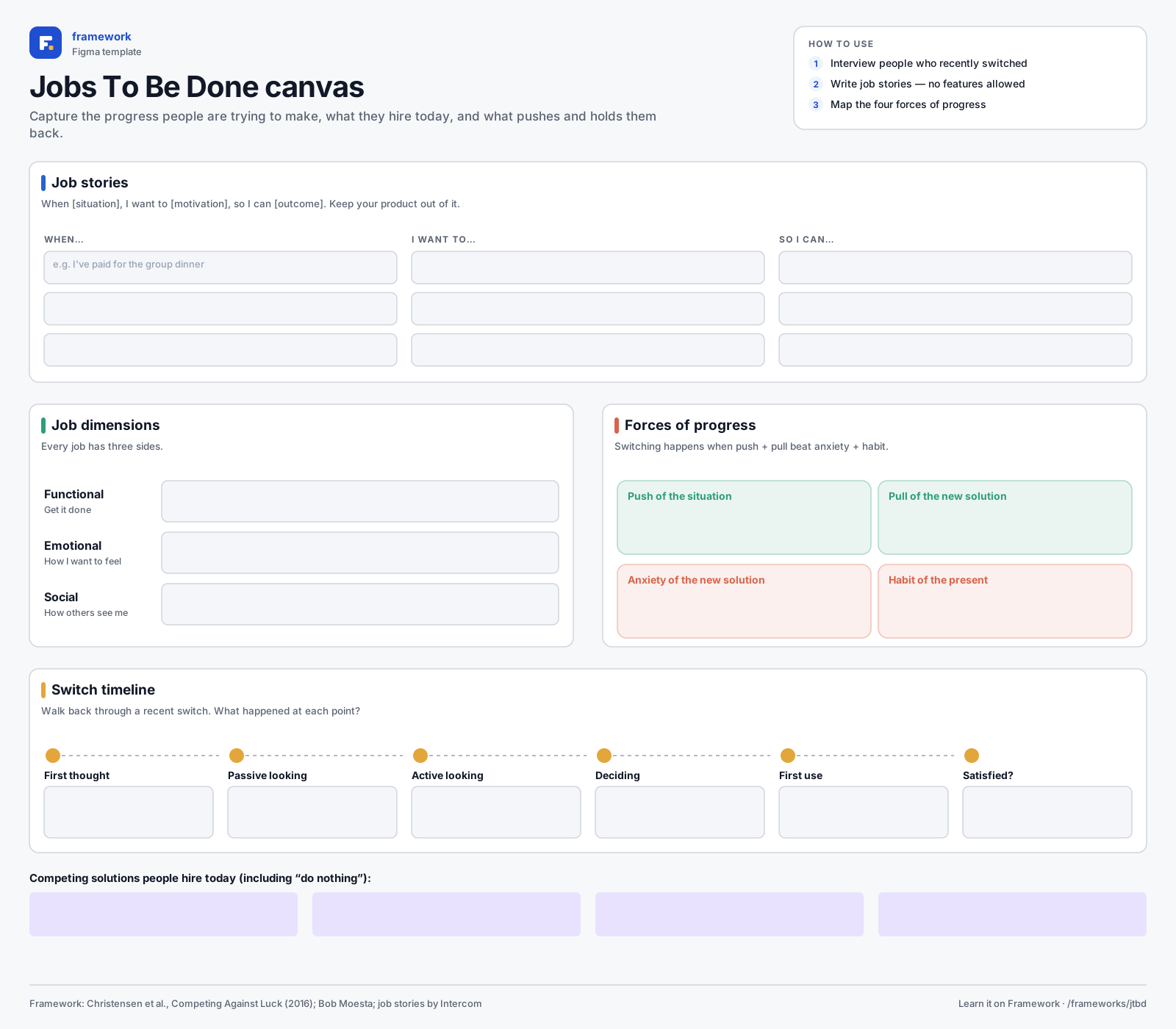
Jobs To Be Done canvas
- Job stories
- Job dimensions
- Forces of progress
- Switch timeline
- 1Download the SVG, or copy it to your clipboard.
- 2In Figma or FigJam, drag the file onto the canvas — or paste with ⌘V / Ctrl V.
- 3Everything arrives as editable layers: type in the boxes, add stickies, duplicate rows.
Quick quiz
Get all three right to complete the lesson.
Notes are private and stored in this browser.
Sources and further reading
- Clayton Christensen et al. — Competing Against Luck (2016)
- Bob Moesta — Demand-Side Sales 101 (2020)
- Intercom — Designing features using job stories
Related frameworks
Design Thinking
Empathise, Define, Ideate, Prototype, Test: a human-centred way to solve problems.