Design Thinking
Empathise, Define, Ideate, Prototype, Test: a human-centred way to solve problems.
Team problem solving and workshops that start from empathy.
A point-of-view statement, ideas and tested prototypes.
Solve problems the way designers do
Design Thinking is a human-centred way to solve problems, made popular by the design firm IDEO and the Stanford d.school in the 2000s. Tim Brown, IDEO's CEO, described it in Change by Design (2009).
The d.school version has five stages: Empathise, Define, Ideate, Prototype, Test. They aren't a straight line — teams move back and forth as they learn.
The five stages
Select a stage. The dashed arrows show where you might loop back.
Empathise
Who are we designing for, and what do they experience?
- Observe people in their real context
- Interview with open questions
- Try the experience yourself (immersion)
Stories, observations, surprises
Tip: Look for what people do, not only what they say.
Desirable, feasible, viable
IDEO's test for a good idea: it sits where all three overlap. Rate an idea and see where it lands.
One dinner, five different tastes
A fictional team at “Thali”, a food delivery app, uses design thinking to help families order together.
A proud team
Empathise: a noisy living room
Define: the real need
Ideate and prototype
Test: dinner, sorted
Fictional worked example for teaching. Thali is not a real company, and the research findings and results are illustrative.
Point-of-view statement builder
The bridge between Empathise and Ideate. A good POV names a user, a need and a surprising insight.
A parent ordering one dinner for a family of five needs to feel sure everyone gets something they enjoy because passing one phone around takes ages and the quietest child never gets asked.
- How might we help parent ordering one dinner for a family of five feel sure everyone gets something they enjoy?
- How might we let everyone choose without passing one phone around?
- How might we turn ordering dinner into a moment the family enjoys?
Common mistakes
✓ Do
- Spend real time with real users before ideating
- Loop back when you learn something new
- Prototype cheaply and early
- Mix people from different roles
- Test with users, not just colleagues
✗ Avoid
- Running a one-day workshop and calling it design thinking
- Skipping empathy because “we know our users”
- Falling in love with the first idea
- Polished prototypes that nobody wants to criticise
- Treating the five stages as a strict checklist
Design Thinking in one screen
STAGES (non-linear)
EMPATHISE  observe, interview, immerse     → stories, surprises
DEFINE     synthesise, POV, HMW            → the real need
IDEATE     brainstorm, sketch, go wide     → many ideas
PROTOTYPE  cheap, fast, just enough        → testable things
TEST       watch, ask, learn               → refine or loop back

POV     [User] needs [need] because [insight].
LENSES  desirable (people) · feasible (technology) · viable (business)
MINDSETS  bias to action · show don't tell · embrace ambiguity
Figma template
A ready-made canvas for running this framework with your team. Free, editable, and it works in Figma and FigJam.
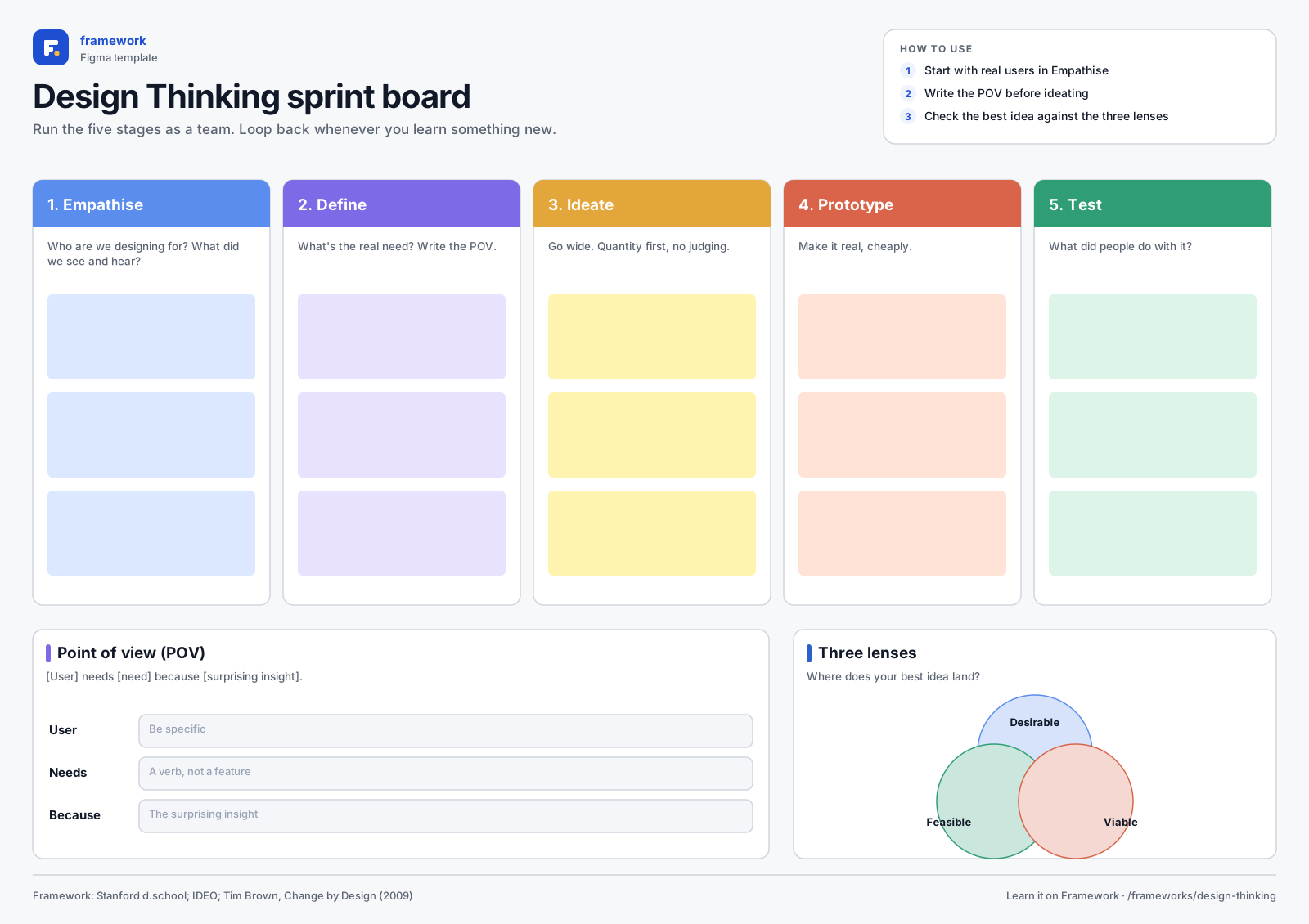
Design Thinking sprint board
- Five stage columns
- Point of view statement
- Three lenses check
- 1Download the SVG, or copy it to your clipboard.
- 2In Figma or FigJam, drag the file onto the canvas — or paste with ⌘V / Ctrl V.
- 3Everything arrives as editable layers: type in the boxes, add stickies, duplicate rows.
Quick quiz
Get all three right to complete the lesson.
Notes are private and stored in this browser.
Sources and further reading
- Stanford d.school — resources
- Tim Brown — Change by Design (2009)
- IDEO — Design thinking
Related frameworks
Empathy Map
One canvas for what a user says, thinks, does and feels.