COM-B
Behaviour needs Capability, Opportunity and Motivation. Widely used in public-health programmes.
Behaviour change in products, services and operations, where the environment and people matter.
The weakest components and matching intervention types.
Capability + Opportunity + Motivation = Behaviour
COM-B was published in 2011 by Susan Michie, Maartje van Stralen and Robert West at University College London. It says any behaviour needs three things: the person must be capable of it, have the opportunity, and be motivated — more than for any competing behaviour.
It sits at the centre of the Behaviour Change Wheel, which links each weak component to the kinds of interventions that work. It started in public health, but it works just as well for products and operations — anywhere people, places and habits shape what happens.
Six components
Each of the three parts splits into two.
Physical capability
Do they have the physical skill or strength?
Psychological capability
Do they know how, and can they remember and understand it?
Physical opportunity
Does the environment allow it — time, place, tools, money?
Social opportunity
Do the people and norms around them support it?
Reflective motivation
Do they believe it matters and plan to do it?
Automatic motivation
Is it a habit, and does it feel good or natural?
Why kitchens tap “Food ready” too early
Restaurants on a food delivery app tap “Food ready” to call the rider. Tap too early and the rider waits; tap too late and the food goes cold. Knowing the rule isn't enough.
The behaviour
Capability
Opportunity
Motivation
Targeted fixes
Illustrative case for a fictional food delivery app, “Thali”; not data from a real company.
Diagnose a behaviour
Rate each component from 0 (big barrier) to 10 (no problem). The weakest ones get suggested interventions.
Change the physical or digital context.
Give people an example to copy.
Use rules to reduce the unwanted behaviour.
Use messages and feelings to change attitudes.
The Behaviour Change Wheel
Nine intervention functions surround COM-B. Pick the ones that match the weak components.
Education
Persuasion
Incentivisation
Coercion
Training
Restriction
Environmental restructuring
Modelling
Enablement
Common mistakes
✓ Do
- Define one specific behaviour: who, what, when, where
- Check all six components before choosing a fix
- Observe and ask people — don't guess the barrier
- Combine interventions for different weak spots
- Measure the behaviour before and after
✗ Avoid
- Assuming every problem is a knowledge problem (“more training!”)
- Awareness campaigns when the environment is the barrier
- Vague targets like “be more careful”
- Ignoring social norms and habits
- Punishment as the first tool
COM-B in one screen
BEHAVIOUR = CAPABILITY + OPPORTUNITY + MOTIVATION

CAPABILITY   physical ........ skill, strength
             psychological ... knowledge, memory, understanding
OPPORTUNITY  physical ........ time, place, tools, money
             social .......... norms, people around them
MOTIVATION   reflective ...... beliefs, plans, goals
             automatic ....... habits, emotions, impulses

INTERVENTION FUNCTIONS (Behaviour Change Wheel)
education · persuasion · incentivisation · coercion · training
restriction · environmental restructuring · modelling · enablement

PROCESS define behaviour → diagnose COM-B → pick functions → design → measureFigma template
A ready-made canvas for running this framework with your team. Free, editable, and it works in Figma and FigJam.
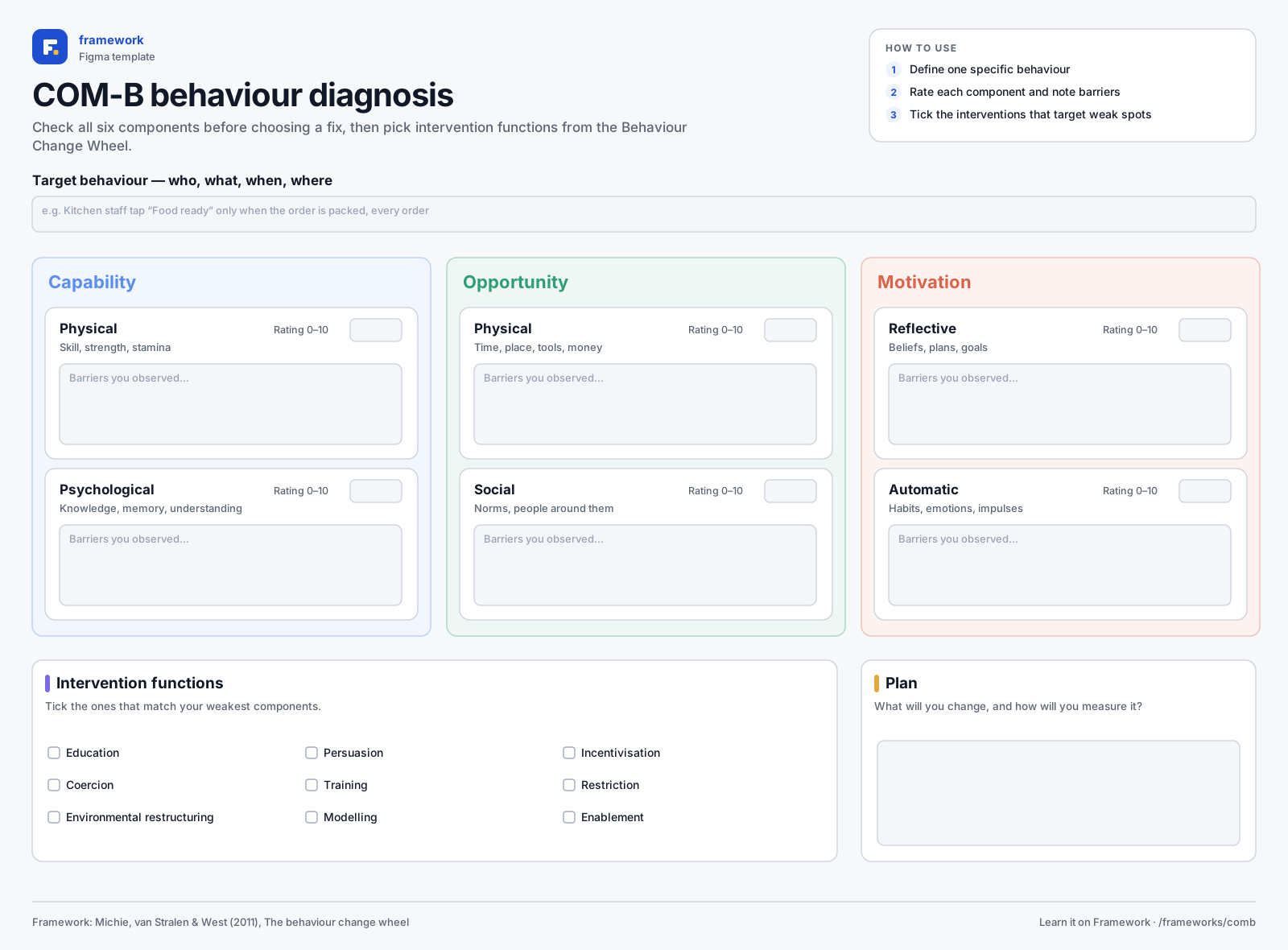
COM-B diagnosis
- Six components with ratings
- Intervention functions
- Plan
- 1Download the SVG, or copy it to your clipboard.
- 2In Figma or FigJam, drag the file onto the canvas — or paste with ⌘V / Ctrl V.
- 3Everything arrives as editable layers: type in the boxes, add stickies, duplicate rows.
Quick quiz
Get all three right to complete the lesson.
Notes are private and stored in this browser.
Sources and further reading
Related frameworks
Double Diamond
Discover, Define, Develop, Deliver: explore the problem before you solve it.