Fogg Behavior Model
Behaviour happens when Motivation, Ability and a Prompt meet at the same moment.
Users aren't doing a key action and you need to know why.
A diagnosis (motivation, ability or prompt) and the right kind of prompt.
B = MAP
Stanford researcher BJ Fogg found that every behaviour needs three things at the same moment:
Behaviour = Motivation + Ability + Prompt
If a user doesn't do something, one of the three is missing. Instead of guessing, you can diagnose which one. He explains it in his book Tiny Habits (2019).
Motivation, Ability, Prompt
Motivation
Motivation rises and falls like a wave. Don't rely on it.
Ability
Ask: “What's making this hard to do?”
Prompt
- Spark: adds motivation when motivation is low
- Facilitator: makes it easier when ability is low
- Signal: a simple reminder when both are high
The action line
Will the behaviour happen?
Pick a scenario or drag the sliders. Then try the suggested fix and watch the dot move.
People mean to do it, but finding the biller, the mandate screen and the limits takes real effort.
Ability is the weak spot: make the behaviour easier. Both are low: first make it much easier; prompting now just annoys.
How UPI made paying for a cup of tea effortless
India's UPI payments spread from big purchases to a ₹10 cup of chai. Fogg's model explains why.
The old way
A prompt at the right spot
Scan, type, PIN, done
A spark to start
Feedback for the shopkeeper
Now it's a habit
Illustrative walkthrough for teaching. Screens are simplified recreations, not real app screenshots.
The Tiny Habits recipe
Fogg's method for building habits: make the behaviour tiny, attach it to something you already do, and celebrate right away.
After I open Figma in the morning, I will read one UX case study for 2 minutes. Then I'll celebrate by saying “Nice, I'm learning!”.
Looks tiny enough. Tiny is the point: it should feel almost too easy to skip.
Common mistakes
✓ Do
- Diagnose first: is it motivation, ability or the prompt?
- Make the behaviour easier before adding rewards
- Put the prompt where and when the behaviour happens
- Match the prompt to the person: spark, facilitator or signal
- Help people feel successful early
✗ Avoid
- Sending more notifications to people below the action line
- Relying on motivation peaks, like New Year's resolutions
- Prompts at the wrong time: “Rate us!” right after an error
- Asking for a big behaviour when a tiny one would start the habit
- Using fear as the main motivator, especially around money
Fogg Behavior Model in one screen
B = M A P   (all three at the same moment)

MOTIVATION  pleasure/pain · hope/fear · acceptance/rejection
ABILITY     time · money · physical effort · mental effort · routine
            → the weakest factor decides
PROMPT      spark ........ low motivation  → add a reason
            facilitator .. low ability     → make it easier
            signal ....... both high       → just remind

ACTION LINE  above: prompt works · below: prompt fails

DIAGNOSE A MISSING BEHAVIOUR
1. Is there a prompt at the right moment?
2. What makes it hard? Fix the weakest ability factor
3. Only then: can we raise motivation?

TINY HABITS: After I [anchor], I will [tiny behaviour]. Then [celebrate].Figma template
A ready-made canvas for running this framework with your team. Free, editable, and it works in Figma and FigJam.
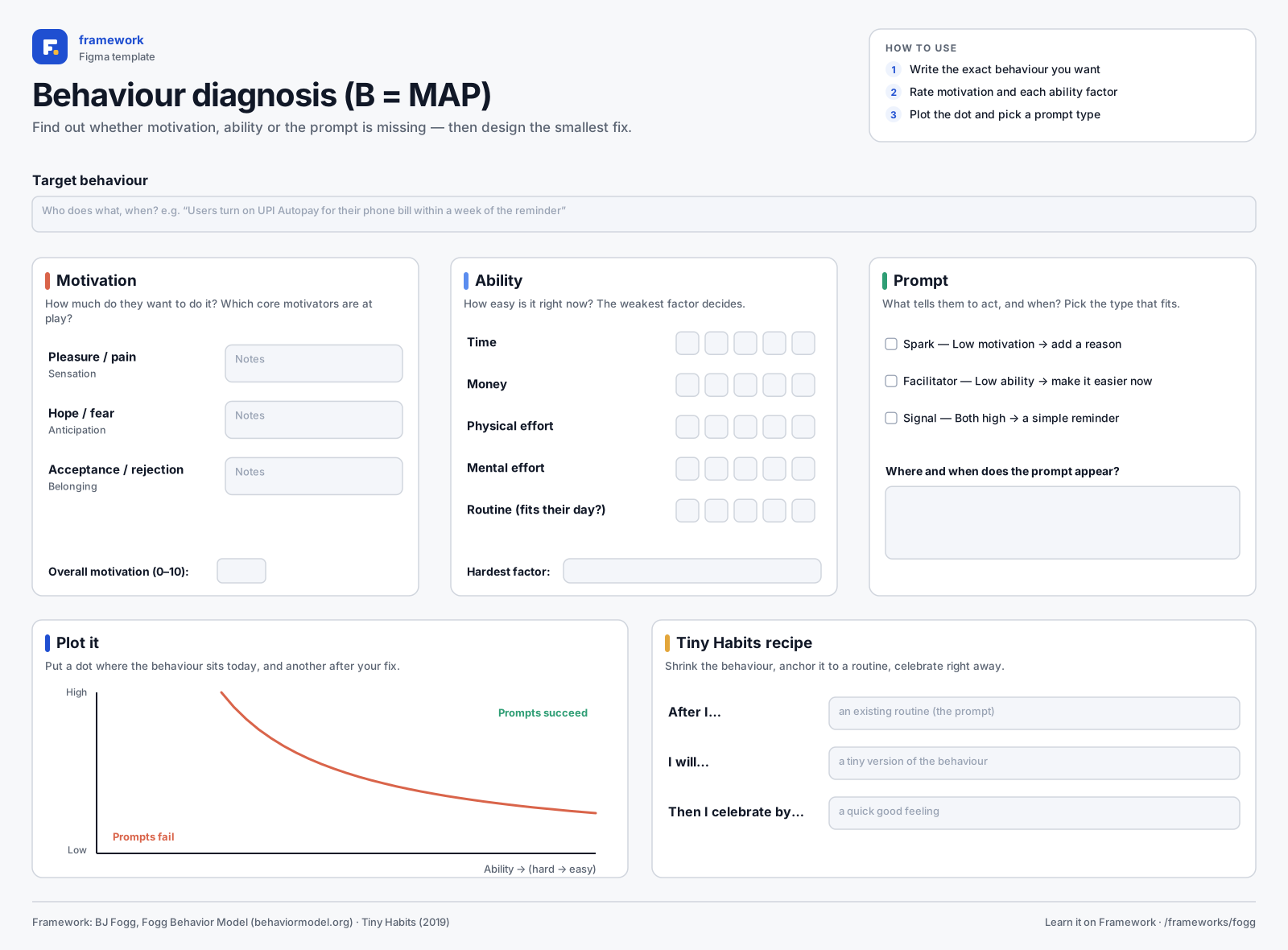
Behaviour diagnosis (B = MAP)
- Motivation, ability and prompt audit
- Action-line plot
- Tiny Habits recipe
- 1Download the SVG, or copy it to your clipboard.
- 2In Figma or FigJam, drag the file onto the canvas — or paste with ⌘V / Ctrl V.
- 3Everything arrives as editable layers: type in the boxes, add stickies, duplicate rows.
Quick quiz
Get all three right to complete the lesson.
Notes are private and stored in this browser.
Sources and further reading
- BJ Fogg — Fogg Behavior Model
- BJ Fogg — Tiny Habits: The Small Changes That Change Everything (2019)
Related frameworks
Hooked Model
Trigger → Action → Variable reward → Investment: the loop behind habit-forming products.